






Blog May 3, 2013
Cairo Journal: Heavy Metal and Ramadan
Today is the first day of Ramadan and on the suggestion of our key adviser here, Kristina Nelson, I am joining the faithful in fasting, as she put it, "to see what it's like." We will be attending a "break-fast" this evening with Kristina in Heliopolis, a sprawling residential extension of Cairo heading towards the airport. So far, I've only foregone breakfast and the stomach rumbling is mild. But after a day of beating around Cairo without drinking water, I may get a taste of what Muslims will endure for the next 30 days. Ramadan is a particular ordeal when it falls in summer, as the daylight hours when one cannot eat or drink last 17 hours.
For this post, I go back to a couple of evening outings from last week. First, a visit to the Cairo Jazz Club, a cozy nighclub favored by ex-pats, well-informed visitors, and progressive Egyptians. Alcohol is served, few women wear the scarf, and people dance, not necessarily in couples. If all this seems normal, it does contrast with other choice music performance venues in Cairo, which are alcohol free, and also with the far sleazier environment of the belly dance bars downtown and along Pyramid Road. The Cairo Jazz Club, not far from downtown, presents local DJs spinning Egyptian varieties of "electronic music," also blues, funk, rock and, yes, jazz, acts. But the night we visited showcased an unusual singer named Mohamed Bashir (also Beshir). Bashir comes from Upper Egypt--that's upriver and, counter-intuitively, south of here--and he uses folk melodies and rhythms from that region as source material for his urban electric band. This was a discovery, a truly organic blend of roots and rock. Instrumentation included oud, violin, bass, drums, keyboards, saxophone and percussion. The grooves were strong, and notably different from the tried-and-true rhythms of most Egyptian pop. Bashir is a powerful singer, and a warm presence on stage--shades of the younger Cheb Khaled. Bashir had his loyal fans too, dancing in the tight space before the stage, some stepping high and coiling their bodies in distinctive ways that suggested knowledge of the Saidi (Upper Egypt) folk culture that inspires Bashir's original sound. We are pursuing an interview with the man.
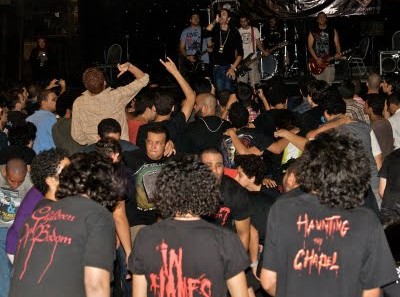
The next night, we ventured into Cairo's touted heavy metal scene. The venue was El Sawy Culturewheel, a short walk from our hotel in Zamalek. In recent years, Sawy has established itself as a key venue for various kinds of alternative music. The venue is arranged around a rather complicated intersection between two major roadways, so there are tunnels and bridges connecting an outdoor garden space right along the Nile with four or five performance spaces, an art gallery and offices. Even on heavy metal night, no alcohol is served. This party runs on caffeine, sugar, and the pent-up energy of youth. There is much to say about Egypt's heavy metal scene, which was pioneered by brave young musicians determined to buck the trends of predictable local pop. Concerts were closed down by police, people were arrested, even jailed, and accused of promoting satanism. But the musicians persisted, and since the revolution, they have been breathing a little easier. The 800 or so kids that showed up for this Tuesday-night lineup of four bands were exuberant and fun-loving. There was no hint of fear in the air. One young metal head lamented the fact that the metal scene was still so small. But he also expressed hope that it would flourish in the new Egypt. He did not seem at all worried about the effects of a potential Islamist government. Those guys will have much bigger things to worry about than heavy metal concerts in Zamalek.

 |
| Bashir at Cairo Jazz Club (Eyre) |